Wherever you go in the valley or Nepal as a whole, be it the roaring cities, peaceful nature, or the quiet alleys, there is always a story to capture. Knowing this, I would wander the streets and alleys with a camera and most often alongside my father, who first introduced me to photography back in grade nine. However, the stories that I came across in every corner of the valley weren’t just some cool travel stories; they were stories with a soul. These living stories were rooted in our culture, religion, and centuries of history in our ancestors’ way of living, all of which boil down to a single word: heritage.
Each walk down the alleys, while being aware of our tangible and intangible heritage, felt like a time travel to the life of our ancestors; so rich in art, knowledge, and community building. And capturing them through the lens felt purposeful and satisfying as it was like freezing a joint memory of the past and present and holding it for the future to experience. While I sustained my interest and advocacy through visual storytelling on my photography account Anekokatha, I still yearned for a space where I could meet like-minded people, share stories, exchange knowledge, and brainstorm and act on heritage preservation. Then one day, a friend sent me a call from Nepalkokala to participate in their workshop series, Yuwa ra Sampada, and it turned out to be exactly the platform I had been looking for.
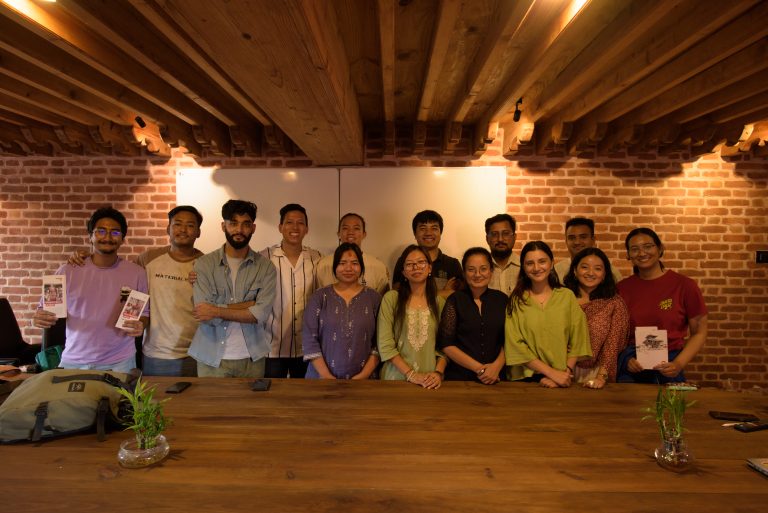
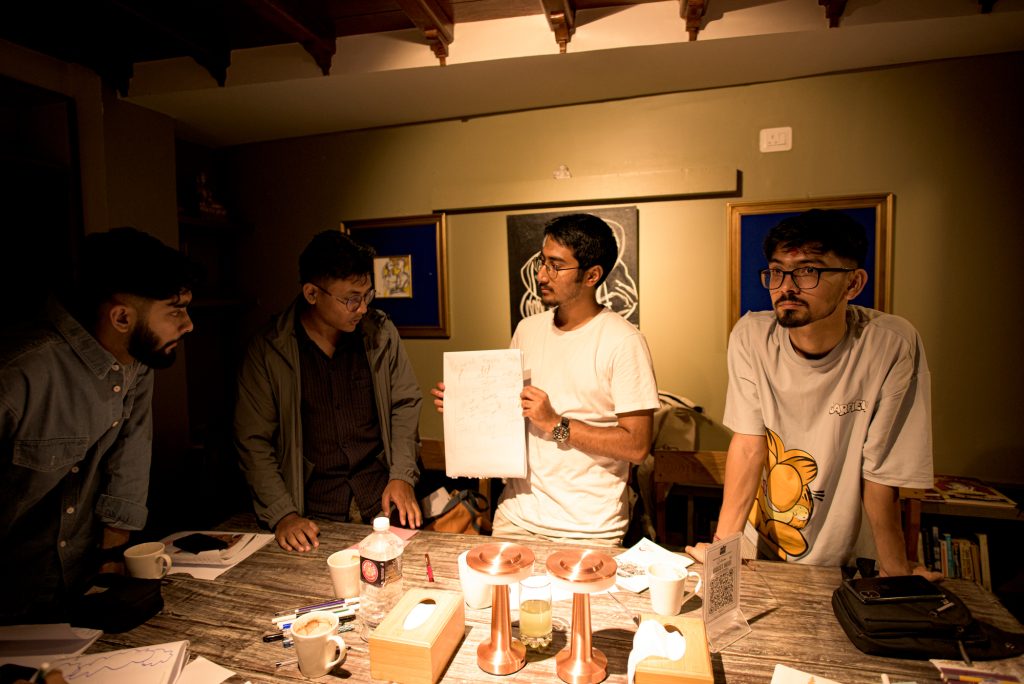
Nepalkokala brought youth participants, soon to be companions, from different backgrounds and walks of life together to explore the connection between heritage, art, and youth involvement in this sphere. Among us were an engineer, a thangka artist, a writer, a teacher, a musician, and many more. This diversity made the six-week, 18-hour workshop series both intriguing and immersive, giving us the chance to bring different perspectives to the table and engage in meaningful discussion around art and heritage.
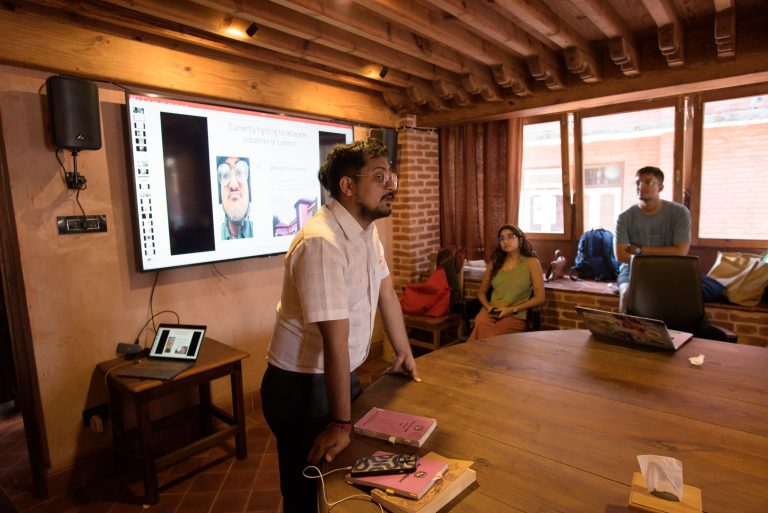
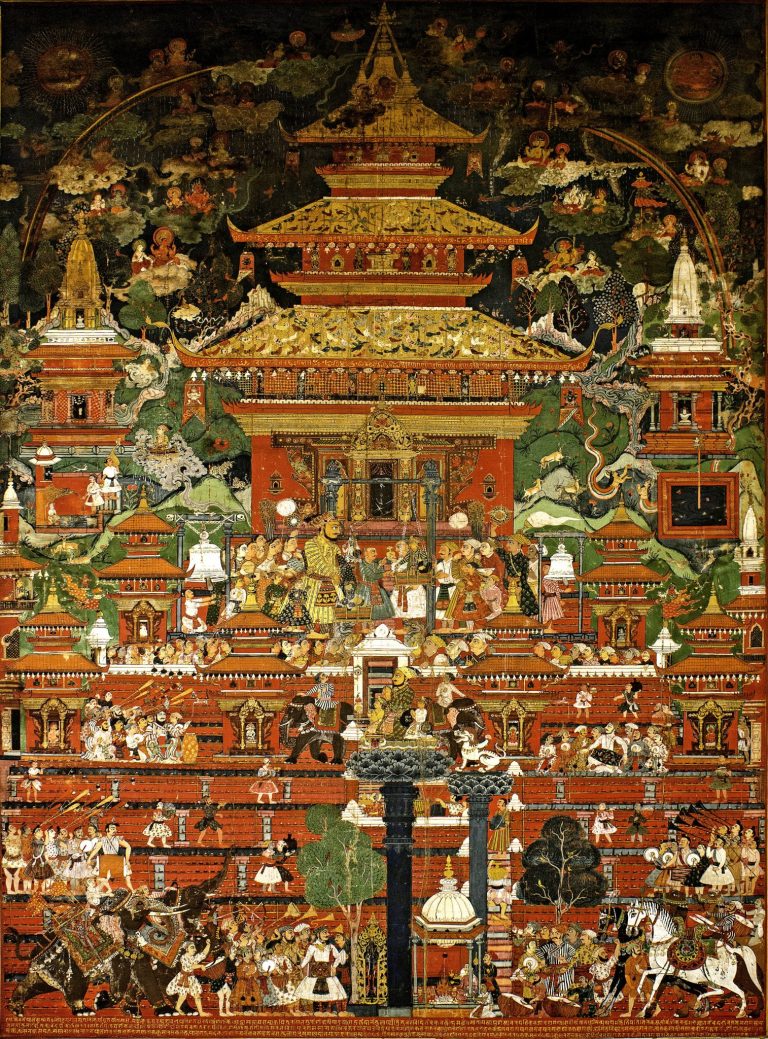
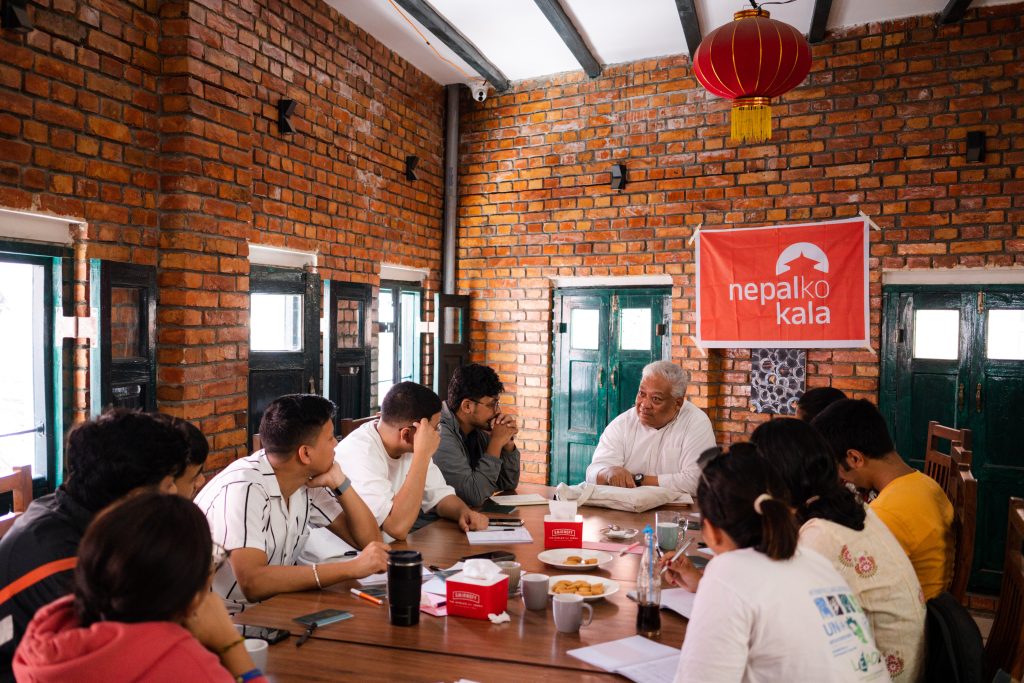
Through a foundational session on heritage by Saurav Thapa Shrestha and a deeper dive into how heritage is an integral part of everyday life by Anil Chitrakar, the workshops helped build the knowledge, skills, and mindset needed to better understand, appreciate, and represent our roots. Dialogues ranged from pausing to contemplate what heritage means to us, to deconstructing the meanings behind existing traditions and iconography, and discovering the actual functions and purposes of certain tangible communal heritage, such as hitis (stone sprouts) and pukhus (ponds).
For instance, the common feature used to identify Surya Dev (“Sun God”) is the seven horses, which coincides with the concept that white light, originating from the sun, is composed of seven colors. How did Nepali people know this in ancient times, and if they possessed such knowledge, why did they not go on to develop technologies like solar panels? Such questions pushed us to set aside conventional thinking about tradition and instead look through the lens of logic, science, and critical thinking.
With an increasing number of younger generations growing distant from their heritage due to various reasons, such as the heavy influence of Western media, the bridge between the past, present, and future appears to be fragile in the contemporary world. Recognizing the roles of youth and younger generations in heritage preservation, we immersed ourselves in a creative session with Rishi Amatya on exploring interactive mediums and ways of storytelling to drive engagement from the younger audience.
Drawing from Rishi Amatya’s ongoing project on child-friendly pamphlets of Patan Durbar Square, we were tasked to create our own version for a temple of our choice, complete with mini activities and stories. The process demanded constant perspective shifts: thinking like a child to keep them engaged, like a storyteller to make the narratives exciting, and like a cultural custodian to ensure nothing was misrepresented. Seeing the final products come to life was thrilling, with ideas ranging from a Pashupati maze to Lakhe and Pimbahal depicted as comics. For me personally, the highlight was simply choosing the temple, each team member bringing their own interests, lesser-known stories, and personal connections with particular heritage sites.
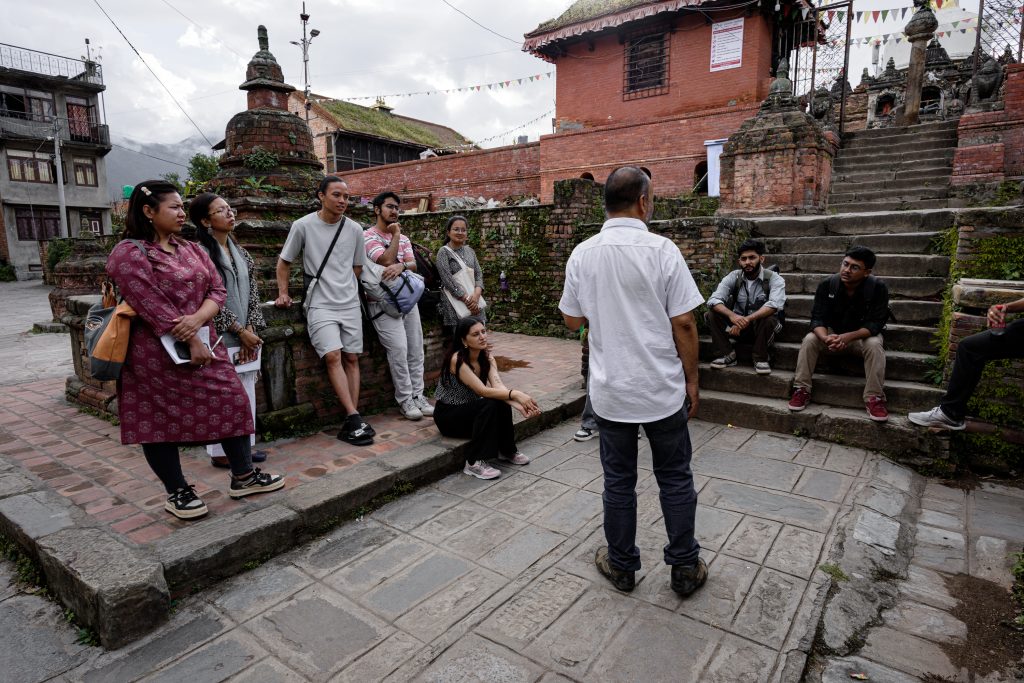
The workshop series naturally extended beyond indoor lectures to include heritage walks led by experts: Alok Siddhi Tuladhar in Kipoo (Kirtipur), who spoke on passing down culture in modern times, and Binita Magaiya in Basantapur, who addressed heritage management during times of crisis and possible avenues for youth engagement and action. In Kipoo, we witnessed the deteriorating conditions of communal spaces such as falchas and Tanani, alongside the misrepresentation of culture through the forced integration of traditional architecture into modern households. In Basantapur, case studies, from the ruins of Kastamandap to its contentious reconstruction after the 2015 earthquake, laid bare the cost of heritage mismanagement. Both walks drove home the same urgency: how quickly our cultural heritage could be lost without proper documentation, knowledge sharing, governance, and advocacy.
The workshop concluded with a session by Sanjay Adhikari on the legal frameworks protecting our existing heritage. Examining the Ancient Monument Preservation Act (1956) was eye-opening, a stark reminder that Nepal has long relied on outdated, government-heavy legislation that is not only failing to protect heritage sites but actively backfiring.
Through the speaker’s candid insights and experiences as a heritage conservation activist, stories so compelling they could fill a Netflix documentary series, we learned about the many barriers to preserving and protecting heritage sites from demolition, vandalism, and theft. Often, these barriers are rooted not only in flawed legal frameworks but also in cultural practices such as prohibitions on photographing deities, which make documentation difficult.
You might be wondering or perhaps frustrated that I’ve given away so much about this workshop series. Don’t worry; this is just a teaser of the many discussions and ‘did you know?’ moments sparked by both facilitators and participants who brought their own experiences and unique insights. Yuwa ra Sampada was, at its core, an insightful dive into Nepal’s heritage landscape, one that reshaped how we see ourselves: not as passive beneficiaries, but as change agents with a responsibility to preserve our roots, ancestral memories, and living culture.
This personal blog is composed by Anek Rajbhandari, participant of the Yuwa ra Sampada Workshops 2025.